
Quick answer
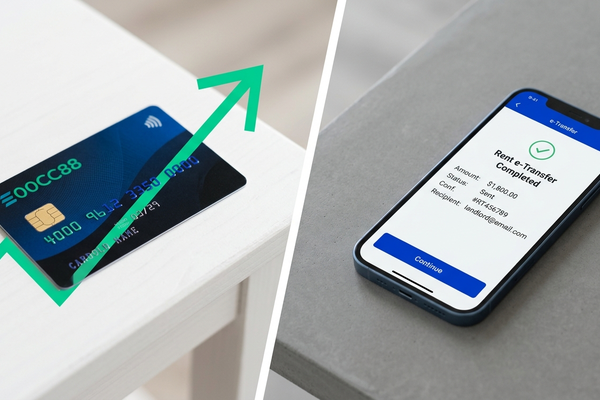
A credit card builds credit because its issuer routinely reports your borrowing and repayment activity to credit bureaus, while a landlord usually does not report rent paid by e-transfer, cheque, or pre-authorized debit. Rent can support your credit history only when a rent-reporting service sends eligible payment information to a bureau.
Your rent may be your largest monthly bill, but traditional rent payments are often invisible to your credit file. A credit card vs rent comparison comes down to reporting, not whether you paid responsibly. Credit card companies are lenders, so they have a reason and an established process for sharing account activity with credit bureaus. Landlords generally collect housing payments without participating in that system.
Key takeaways
- Credit cards build credit when lenders report account activity and payment history to credit bureaus.
- Rent paid through ordinary methods usually does not appear on a credit report without active reporting.
- Rent reporting can make consistent on-time housing payments visible to Equifax.
Why Credit Activity Appears on Your Credit Report
Credit reports track how you handle money you borrowed, not every bill you pay. A credit card is a revolving credit account, meaning the issuer extends credit and then evaluates whether you repay what you used. That lender relationship creates reportable information that can help or hurt your file.
What a Credit Card Issuer Reports
When you use a credit card, the issuer can share the account opening date, balance, credit limit, payment status, and missed payments with credit bureaus. The federal guidance on credit report basics explains why this information can influence future lending decisions. Paying on time matters, but carrying a high balance relative to your available credit can still signal greater borrowing pressure.
- Account type: A credit card is a credit product, so it belongs in the credit-reporting system.
- Payment history: On-time and late payments can become part of the account record.
- Balance use: Your reported balance shows how much of your available revolving credit you are using.
- Account age: An established account can add history to a thin credit file.
Why Paying the Full Balance Still Helps
You do not need to pay interest for a credit card to contribute useful history. You can make ordinary purchases, wait for the statement, and pay the full statement balance by its due date. The issuer may still report the account and its payment status, which is why a card can help establish a record even when you avoid borrowing costs. Details about how creditors update account information are also covered in credit bureau reporting.
Why Traditional Rent Payments Usually Stay Invisible
Rent is not less important than a credit card bill. The gap exists because a landlord is usually not a credit issuer and may have no reporting arrangement with Equifax or TransUnion. Even a flawless record of rent paid on time can remain outside your file when the payment is made by cheque, e-transfer, or bank withdrawal.
Rent Payment Is Not Automatically Credit Reporting
The question of does rent build credit has a simple answer: not by default in Canada. Your bank may show completed transfers, and your landlord may keep receipts, but neither record automatically becomes credit-bureau data. A credit bureau needs payment information from a participating reporting source before it can be considered in a credit file.
This reporting gap can feel especially unfair for newcomers and younger renters who are proving reliability every month without building much documented credit history. It can also matter when you are preparing for a home purchase, because lenders review a borrower’s broader credit profile alongside housing and consumer-debt patterns. Canadian mortgage and credit trends show why credit remains closely connected to housing decisions.
Credit Card vs Pre-Authorized Debit for Rent
A credit card payment can build credit through the card issuer’s reporting, while pre-authorized debit simply moves money from your bank account to your landlord. That distinction is central to rent reporting vs credit card: the payment method alone does not make rent reportable. Rent needs a separate reporting mechanism, and card payments need to be paid on time to avoid creating a negative record.
| Payment approach | Who may report | What reaches a credit file | Main watch-out |
|---|---|---|---|
| Credit card purchases | Card issuer | Account and repayment activity | Late payments or high balances can hurt |
| Cheque or e-transfer rent | Usually nobody | Typically no rent record | On-time payments stay invisible |
| Pre-authorized debit rent | Usually nobody | Typically no rent record | Automation does not equal reporting |
| Rent reporting service | Participating service | Eligible rent-payment history | Confirm the bureau and reporting terms |
The practical point is simple: paying rent automatically is useful for avoiding late payments, but automation alone does not build a credit record unless the rent payment is reported.
How to Make Your Rent Count Toward Your Credit History
To build credit with rent, choose a service that can report eligible monthly rent payments and keep every payment on schedule. Before enrolling, confirm which credit bureau receives the information, what payment setup is required, and whether your landlord needs to take any action. A reporting tool should make the process clearer, not add uncertainty to an already essential bill.
Use Rent Reporting Instead of Assuming Rent Is Counted
TenantPay gives Canadian tenants a way to report monthly rent payments to Equifax for free when they enable autopay, with no landlord participation required. That makes a recurring housing payment more visible than it would be through a traditional cheque or e-transfer. It does not promise a particular score increase, because credit scores respond to the full contents of your file, including other debts, late payments, and the length of your credit history.
Rent reporting works best as one part of a steady routine. Keep card balances manageable, pay every bill by its due date, and review your credit report for errors. The purpose is not to manufacture a score quickly; it is to ensure a payment record you have already earned is not overlooked.
Decide Whether Paying Rent by Card Fits Your Budget
If you want to pay rent with a credit card in Canada, first confirm the payment option, any processing cost, and whether you can pay the card statement in full. TenantPay supports Visa, Mastercard, debit cards, and cryptocurrency, while also providing payment tracking, reminders, receipts, and autopay. A card can add convenience and potentially earn card rewards, but it is a poor choice if it turns rent into a balance you cannot repay.
Keep Records That Support Your Financial Plans
Keep rent receipts, payment summaries, and your lease even after you start reporting rent. These documents can help explain your housing-payment history during an application or resolve a disagreement with a landlord. TenantPay also generates receipts and tax-ready payment summaries, which gives renters a cleaner record than a scattered set of transfer confirmations.
Conclusion
Credit cards build credit because lenders report them, while ordinary rent payments usually disappear from the credit system. Paying rent on time is still financially responsible, but it only becomes visible to a bureau when a reporting service submits eligible payment history. Set up a payment method you can afford, protect your card payment history, and choose rent reporting if you want your largest monthly bill to support your financial record. The goal is not to rely on more debt, but to get fair recognition for payments you already make.
Want your on-time rent to be more visible? Explore TenantPay credit building and review the payment options that fit your budget.
Frequently Asked Questions
Can I pay rent with a credit card in Canada?
Yes, you can pay rent with a credit card in Canada when your landlord, property manager, or payment platform accepts card-funded rent payments, but you should confirm any processing costs and ensure the full card balance remains affordable by the statement due date.
How to build credit score by paying rent?
To build a credit score by paying rent, use a rent-reporting service that submits eligible on-time rent payments to a credit bureau, because a bank transfer receipt or landlord ledger alone does not normally create a credit-report entry.
Is it worth paying rent with a credit card?
Paying rent with a credit card is worth considering when you can pay the statement in full, the payment cost makes sense for your budget, and you value card rewards or payment flexibility without carrying rent debt.
Does TenantPay report rent payments to Equifax?
TenantPay reports eligible monthly rent payments to Equifax for free when autopay is enabled, allowing renters to add documented rent-payment history without requiring their landlord to participate in the process.
What are the benefits of paying rent with a credit card?
The benefits of paying rent with a credit card can include consolidated payment tracking, potential card rewards, and a reported card account, although the card account is separate from rent reporting and requires full, on-time repayment to avoid interest and negative history.
How does rent reporting compare to credit card credit building in Canada?
Rent reporting compares with credit card credit building in Canada by making eligible on-time housing payments visible to a bureau, whereas a credit card reports lender-managed borrowing activity such as balances, payment status, and account history.