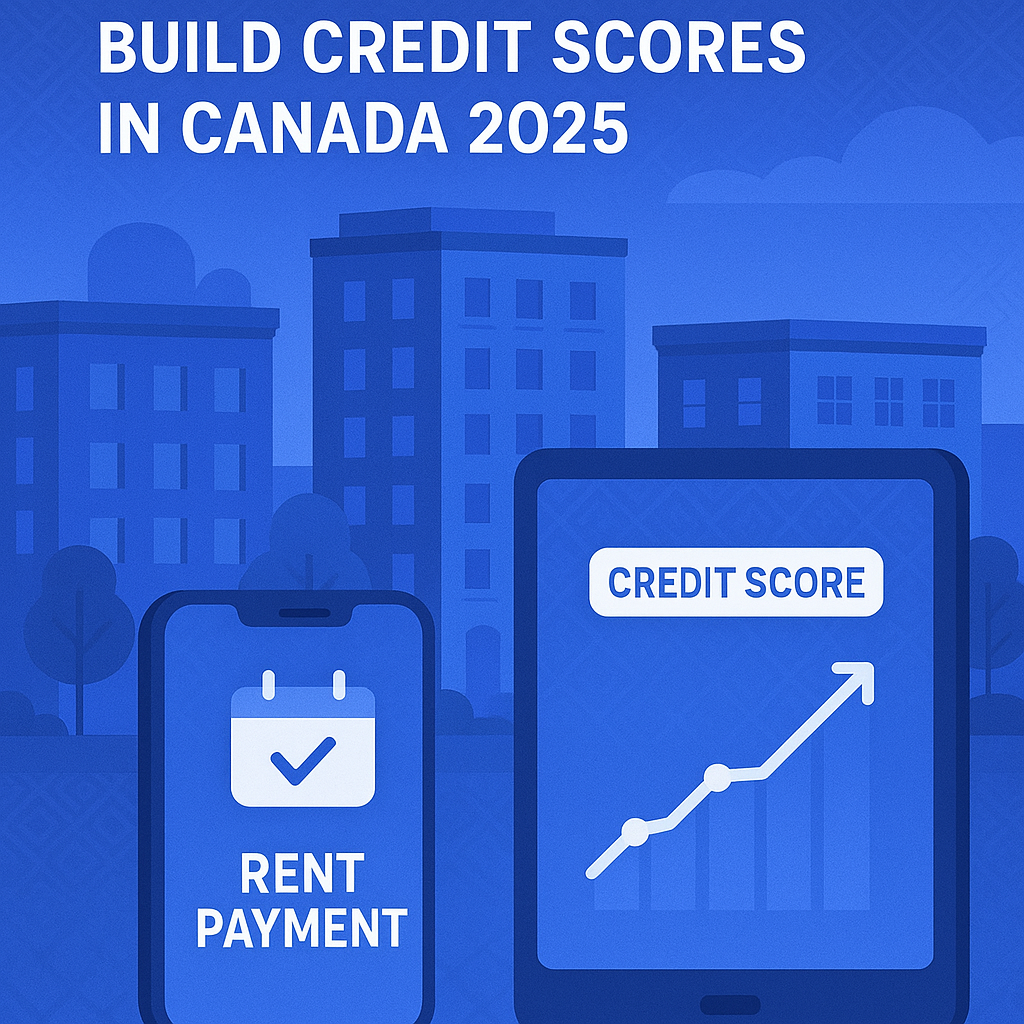

Quick answer: Paying rent in Canada does not build credit on its own. Your rent only helps your credit score when a rent reporting service sends those payments to a credit bureau like Equifax Canada, and once reported, on-time rent can lift a thin-file score by roughly 20 to 60 points within a few months.
Most Canadian renters spend $1,500 to $2,800 a month on housing, yet that payment usually leaves zero footprint on their Equifax or TransUnion file. Landlords are not connected to the credit bureaus by default, so a decade of perfect rent history can sit invisible while a $500 credit card quietly does all the work of proving you are creditworthy. The fix is not paying rent differently. The fix is getting it reported. That single change is what separates renters who stay stuck with thin files from renters who walk into a mortgage broker with a 720 score.
Key takeaways
- Rent only counts toward your credit score if a rent reporting service forwards your payments to Equifax or TransUnion.
- Most Canadian renters see measurable score gains within 2 to 3 reporting cycles, especially on thin files.
- Free rent reporting exists in Canada, so paying extra fees to build credit through rent is rarely necessary.
Why rent does not automatically build credit
Credit bureaus only see what lenders and approved data furnishers send them. Your landlord is neither, which is why whether rent builds credit comes down to one question: is someone actually reporting it?
How the Canadian credit system sees rent
Equifax and TransUnion build your score using data furnished by banks, credit card issuers, telecoms, and a small number of approved third parties. Rent has historically sat outside that pipeline. Even a tenant paying $2,400 a month for ten years generates no trade line, no payment history, and no score benefit unless a reporting service is involved.
- Landlord reporting: Individual landlords cannot report to Equifax directly and have no incentive to set up a reporting pipeline.
- Bank records: Your bank sees the e-transfer or debit but does not label it as rent for the bureaus.
- Utility comparison: Some utilities and telecoms report because they operate as credit accounts. Rent does not.
- Approved furnishers: Only registered rent reporting services can push your payments into your credit file.
What actually moves your score
Payment history makes up roughly 35% of your credit score, and credit mix contributes another 10%. When rent gets reported as an ongoing trade line, both factors move in your favour: you gain a long-term account with consistent on-time payments, which is exactly the pattern lenders reward. For thin-file renters, newcomers, and anyone rebuilding, that new trade line often produces the biggest single jump they will see in a year of trying. If you want the wider picture, our guide on how to build credit as a renter in Canada walks through every lever available to tenants.
How rent reporting actually works
Rent reporting is the mechanism that turns a monthly payment into a credit-building activity. It works by verifying your rent payment, then transmitting that record to one or both bureaus each month.
The reporting process step by step
The process is straightforward once you enroll with a service that has an existing data-furnishing relationship with Equifax or TransUnion. You provide your address, lease details, and payment method. The service verifies your rent, tracks each on-time payment, and reports it as a trade line on your credit file. Missed or late payments can also be reported, so this is not a shortcut. It rewards consistency and penalizes lapses the same way a credit card does.
According to reported score data from Canadian services, renters commonly see gains between 20 and 60 points once several months of history land on file. TenantPay reports rent payments to Equifax Canada for free when you enable autopay, which removes the fee barrier that keeps many renters from starting.
Free versus paid reporting
Some Canadian services charge $6 to $10 per month to report rent. Others, including TenantPay, do it at no cost when paired with automatic rent payments. Both approaches feed the same bureaus, so the difference is mostly about whether you want to pay for a standalone reporting tool or bundle it with a payment platform you already use. If cost is the deciding factor, our breakdown of whether rent reporting is worth the fee runs the math, and you can compare plans on TenantPay pricing. Canadian rent reporting programs have expanded significantly since Equifax first partnered with third-party furnishers, and free options are now widely available.
Getting the most out of rent reporting
Enrolling is the easy part. Getting real score movement takes a few months of clean payment history and knowing what to expect along the way.
Setting realistic expectations
New trade lines usually appear on your Equifax file within 30 to 60 days of enrollment, and the score impact typically shows up within 2 to 3 reporting cycles. For a renter with no other credit accounts, the first reported month can produce a noticeable jump because there is finally something on file. For someone with an established score in the mid-700s, gains will be smaller because the file is already dense. Reviewing how long rent reporting takes to move a score is worth doing before you enroll, so you are not checking Borrowell obsessively in week two.
Late payments hurt. If you miss a rent payment after enrolling, it can be reported the same way a missed credit card payment would be. Autopay solves this for most renters, which is why rent reporting builds credit most reliably when paired with automated payments rather than manual e-transfers.
Combining rent reporting with other credit habits
Rent reporting works best as one lever among several. Pair it with a secured or low-limit credit card used for small recurring purchases, keep utilization under 30%, and avoid opening multiple new accounts in a short window. Layering strategies gives you a healthier credit mix and a faster path to a mortgage-ready score. TenantPay users often stack rent reporting with credit card rent payments, which builds two positive data points from the same monthly bill.
The bottom line for Canadian renters
Rent does not build credit in Canada on its own, but reported rent absolutely does. The gap between the two is a signup form and a working autopay setup.
For newcomers, young renters, and anyone with a thin file, turning on rent reporting is one of the highest-return moves available because it converts your largest monthly expense into a credit-building trade line. Choose a free option if you can, keep payments on time, and give the bureaus a few months to catch up. That is how a rent cheque becomes a mortgage-ready credit history.
Ready to make your rent count toward your credit score? Start reporting rent with TenantPay and turn your monthly payment into free credit building through Equifax Canada.
Frequently Asked Questions
Does paying rent report to Equifax automatically?
No. Rent only reaches Equifax when an approved rent reporting service forwards your payments on your behalf.
How do I build my credit score in Canada as a renter?
Enroll in a rent reporting service, pay on time every month, and pair it with a credit card kept under 30 percent utilization.
Can rent payments help my credit score?
Yes. Once reported, on-time rent typically raises Canadian credit scores by 20 to 60 points within a few months, especially for thin-file renters.
How do I report my rent to the credit bureaus?
Sign up with a Canadian rent reporting service such as TenantPay, verify your lease and payment details, and let the service furnish your payment history to Equifax each month.
Is reporting rent payments free in Canada?
Yes, free options exist. TenantPay reports rent payments to Equifax at no cost when you use autopay, while some standalone services charge a monthly fee.
How does rent reporting affect my credit history if I miss a payment?
Missed or late rent payments can be reported the same way as any other trade line, which is why enabling autopay before you enroll is strongly recommended.
Do landlords need to participate for rent reporting to work?
No. Tenant-side services like TenantPay verify and report your rent without requiring the landlord to sign up or change how they collect payment.